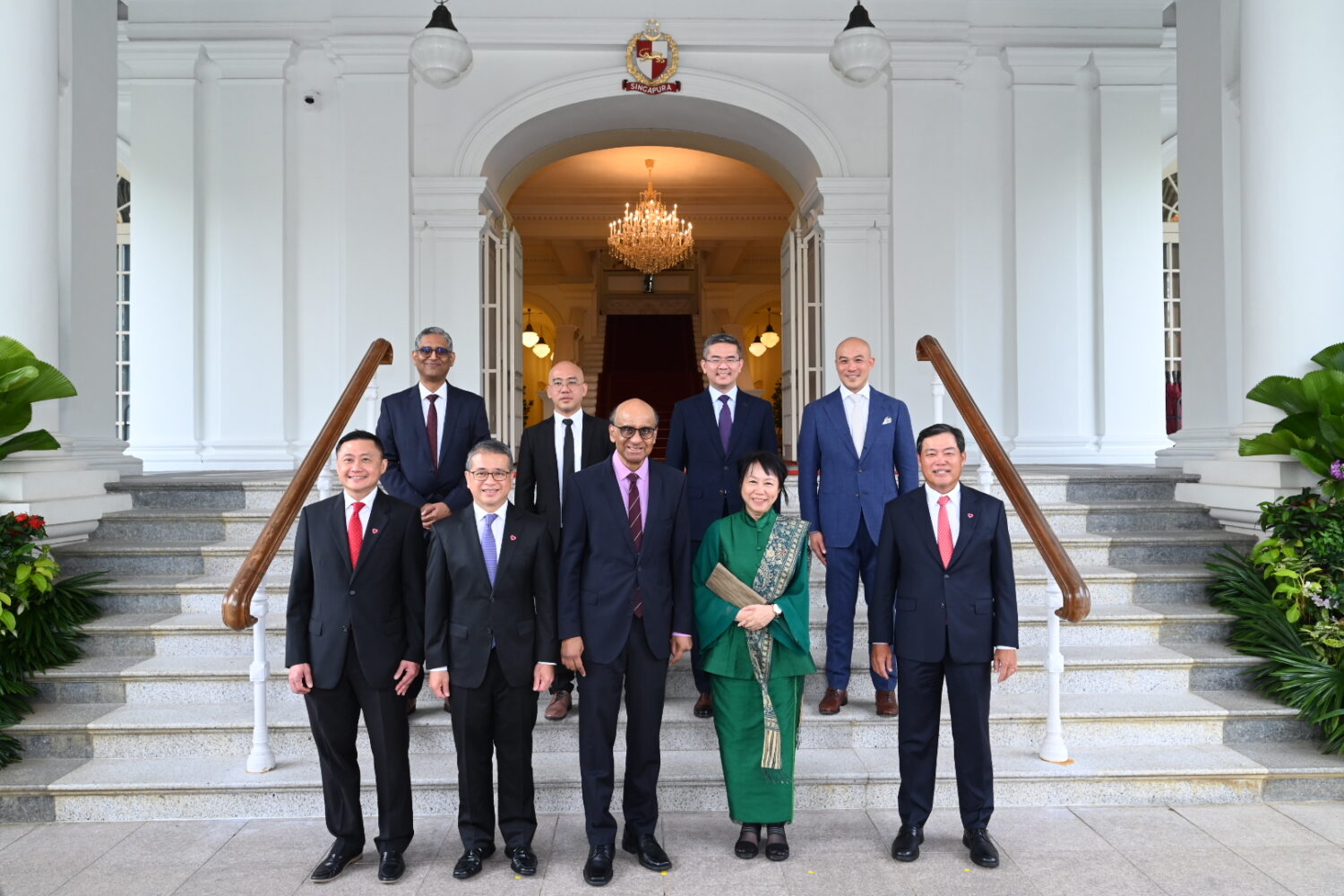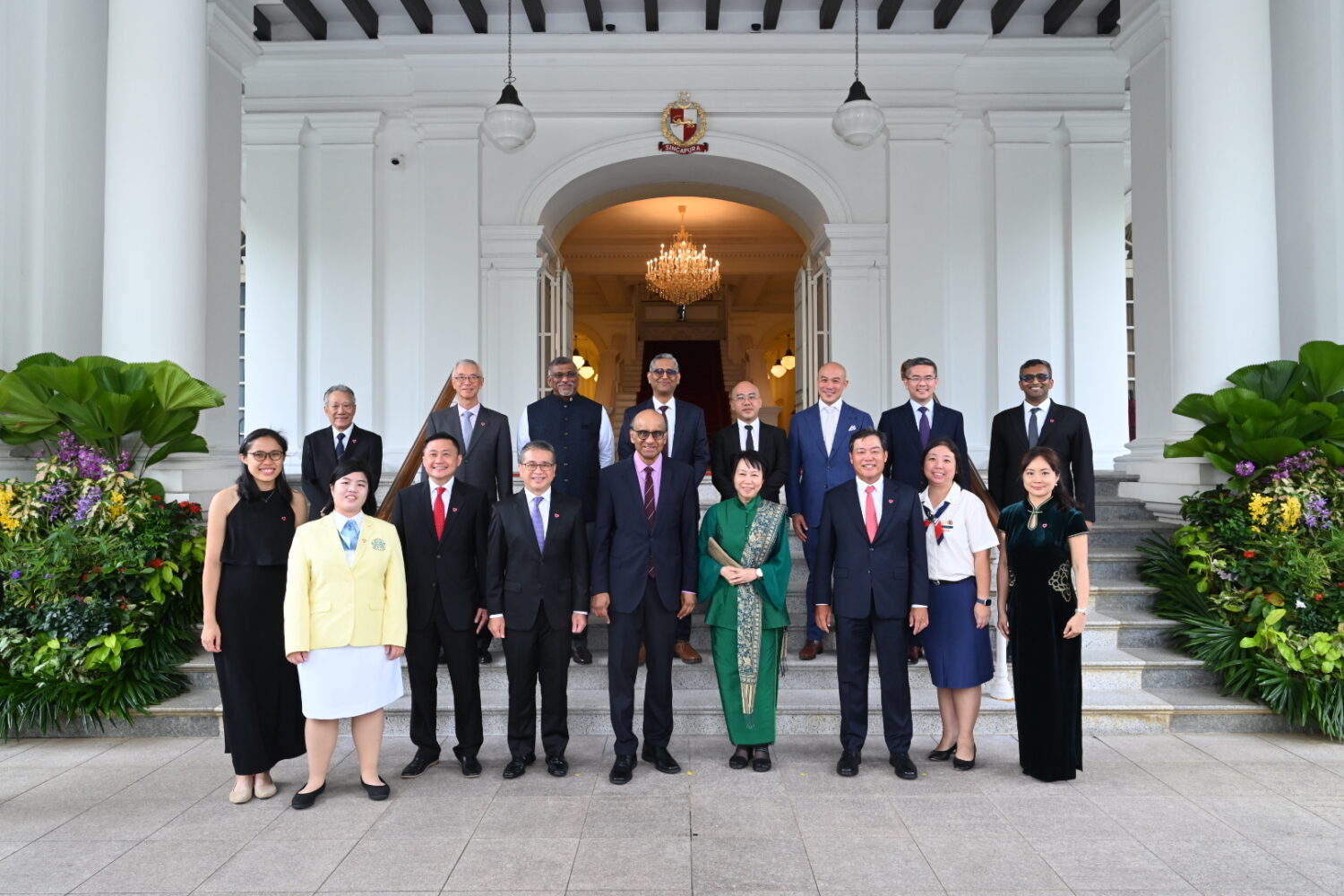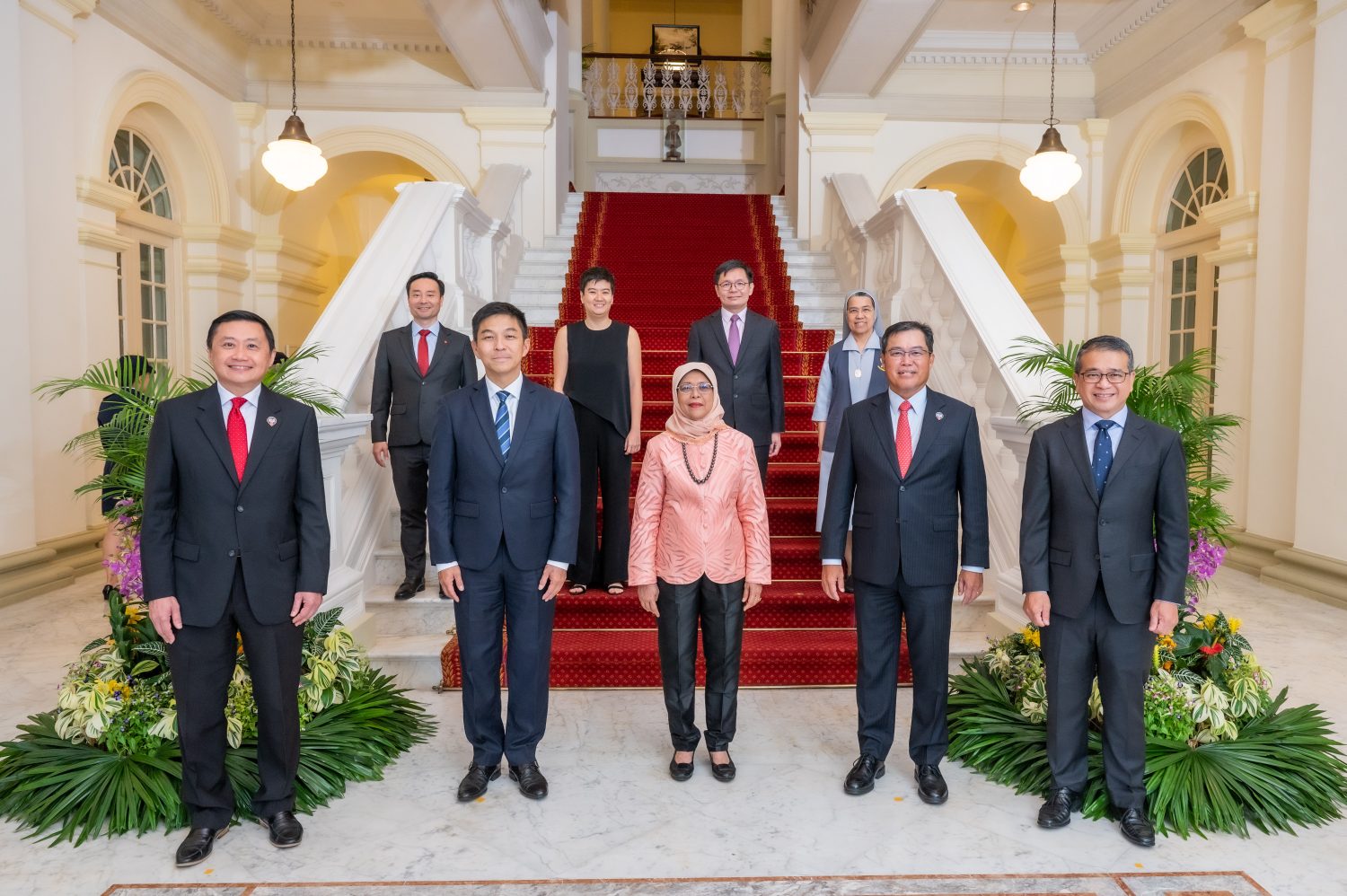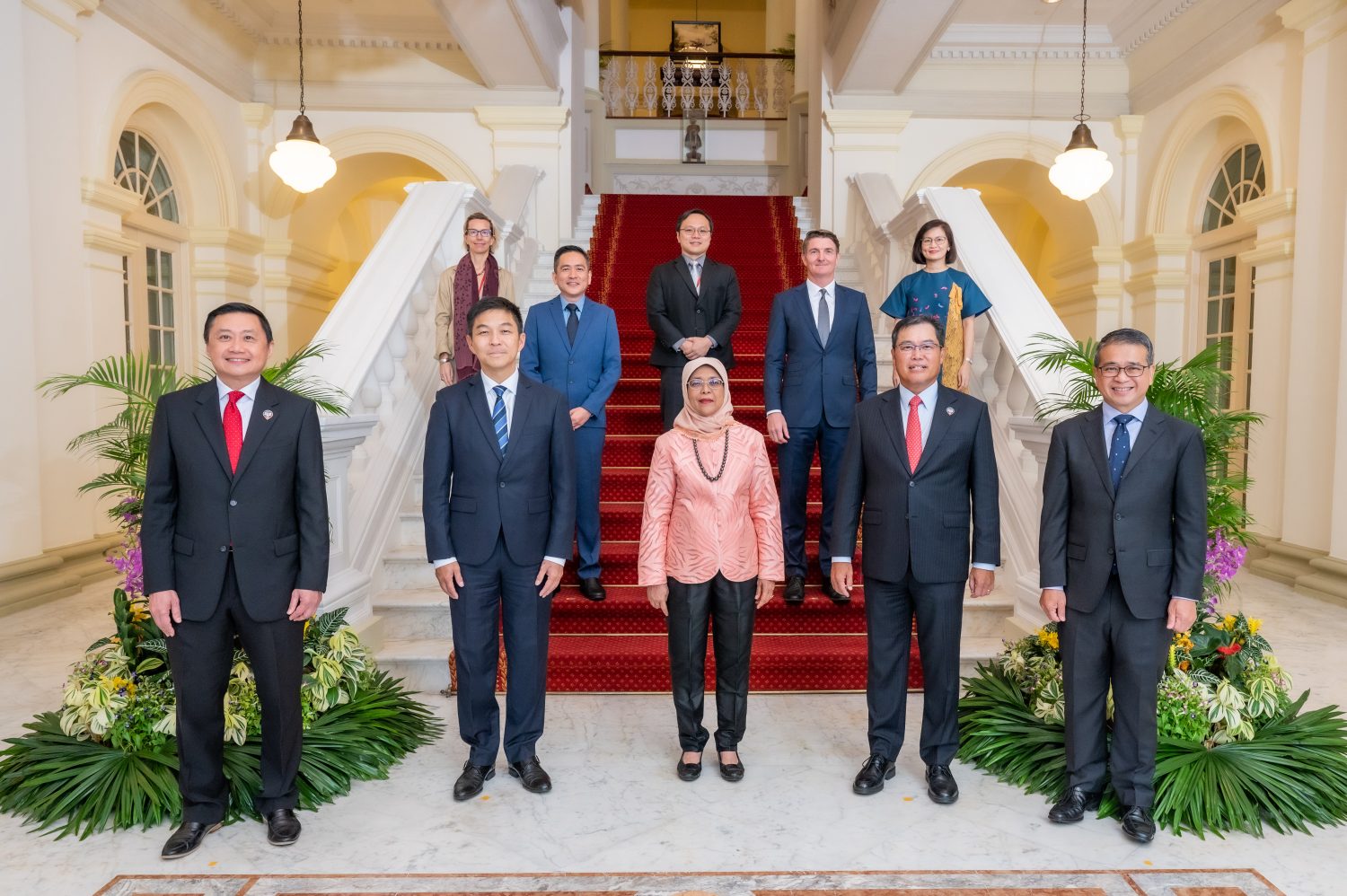



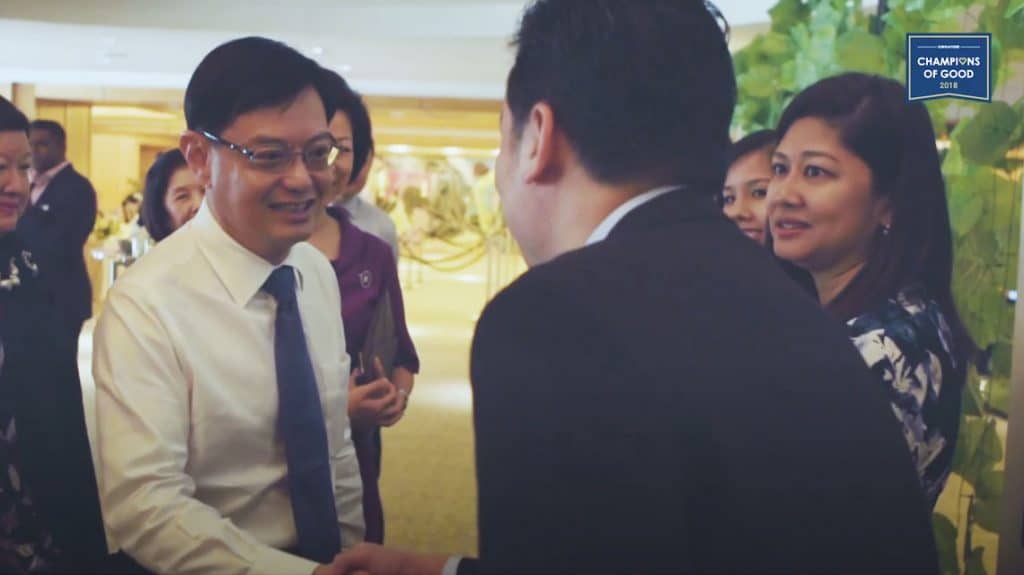
This year, seven individuals and organisations were recognised for their pinnacle achievements in volunteerism and philanthropy. The awards were given out by Acting Minister for Community Development, Youth and Sports Chan Chun Sing on 4 November 2011, at the National University of Singapore University Cultural Centre.
Award Categories and Winners
A. CORPORATE AND PUBLIC SECTOR CATEGORY
This category recognises best practices in volunteerism or philanthropy in private and public sector organisations. There are three separate awards in this category.
Corporate Philanthropist of the Year Award
Winner: Deutsche Bank AG – Singapore Branch
Corporate Volunteer of the Year Award
Winner: United Parcel Service Singapore Private Limited
Public Sector Volunteer of the Year Award
Winner: KK Women’s and Children’s Hospital
Winning attributes of present and past winners: To download, right click the link, “save target as” and open the .pdf file with Acrobat Reader.
B. NON-PROFIT ORGANISATION CATEGORY
This category recognises best practices in the management of volunteers or donors (including fundraising practices) in non-profit organisations. There are two separate awards in this category.
Non-profit Organisation of the Year Award (Philanthropy Management)
Winner: Boys’ Town
Non-profit Organisation of the Year Award (Volunteer Management)
Winner: Fei Yue Family Service Centre
Winning attributes of present and past winners: To download, right click the link, "save target as" and open the .pdf file with Acrobat Reader.
C. INDIVIDUAL AND SPECIAL RECOGNITION CATEGORY
This category recognises an individual, group, organisation, programme or campaign for outstanding and exemplary contributions to the non-profit sector and to society that are not recognised in the other award categories. Nominees in this category must inspire as a multiplier or catalyst, a great mobiliser of resources, or as a giver in a significant way. There are three separate awards in this category.
Philanthropist of the Year Award
Winner: There is no award recipient for this year.
Volunteer of the Year Award
Winner: Mr Kong Mun Kwong, JP, PBM, BBM, BBM(L)
Special Recognition Award
Winner: Mrs Leaena Tambyah
ENQUIRIES
For enquiries, please email Ms Tang Huimin at huimin@nvpc.org.sg.
CORPORATE PHILANTHROPIST OF THE YEAR AWARD
DEUTSCHE BANK AG – SINGAPORE BRANCH
Corporate philosophy and commitment
Deutsche Bank regards corporate social responsibility (CSR) as an investment in society and in its own future. Its goal as a responsible corporate citizen is to create social capital aimed at enhancing the quality of life of disadvantaged communities, even those that are not part of the bank’s footprint.
The bank has five core pillars for its CSR: sustainability, corporate volunteering, art and music, education and social investments.
Founded in 2003, the Deutsche Bank Asia Foundation (DBAF) is Deutsche Bank’s corporate citizenship programme in Asia. The bank provides a fixed dollar amount for charitable causes annually. Even in times of financial crisis (e.g. 2008/2009), the bank’s commitment to community involvement remains strong due to long-term partnerships with charities.
Planning and policies
The Chief Country Officer for Singapore is deeply engaged in Deutsche Bank’s community involvement programme locally. He chairs the CSR Singapore steering committee comprising senior bankers from all business groups as well as individual charity champions, helps set the vision and drives the strategy behind Deutsche Bank’s community initiatives. He is accountable for the country’s CSR budget, which is used to fund and support community involvement projects, and reviews and approves all applications for support for community involvement projects.
Local community involvement projects are either bank-driven (via the Singapore CSR steering committee) or employee-driven (via an internal CSR funding mechanism).
Implementation
In Financial Year 2010, the total contribution by Deutsche Bank, DBAF and funds raised by employees, customers and business associates were about S$1.6 million, with about half being direct donations by Deutsche Bank.
Staff are encouraged to flag themselves as a corporate volunteer on their personal staff profile page on the bank’s directory. The bank has a scheme called Initiative Plus, which provides a group grant of up to S$6,000 per project to employees’ selected charities. An average of 10 projects are initiated and led by staff each year.
Community involvement initiatives include:
· Donate-A-Day: Staff may sign up to donate a day or more of their salary to nominated charities. In 2010, the total amount raised in Singapore was over S$150,000 and was divided equally among four nominated charities, three of which were in Singapore and the fourth in Indonesia.
· Deutsche Bank Art Bus: Chartering of a public bus to bring children on a weekly basis from their schools to the Singapore Art Museum and back. The bank’s commitment also includes subsidising the fees for the art programme and classes. Beneficiaries of exposure to the arts included the elderly from Concern and Care Society Singapore, and underprivileged students from Care Community Services Society. At the end of 2010, the number of beneficiaries for this programme was over 2,600.
· Children's Voice Charity Golf: Raised S$210,000 for three children-related charity organisations in 2009. The amount was distributed equally among the three organisations which provide educational, development, mentoring and other aid programmes for at-risk youths from underprivileged backgrounds. Deutsche Bank has so far raised about S$1 million over four golf events.
Reviewing results
Updates on community involvement activities are sent to head office twice monthly and featured on the bank’s CSR Intranet and Internet sites. There is also a regional Asia CSR report.
Deutsche Bank is committed to create a clear picture of its contributions and impact it is having on communities, and has chosen the London Benchmarking Group (LBG) model. The model is currently being rolled out to all non-profit organisations (NPOs) supported by DBAF.
In addition to the LBG model, DBAF requests for quarterly or half-yearly reports from supported NPOs to monitor the more specific impacts based on the nature of the projects.
A Singapore employee survey is also being rolled out to properly quantify the impact and to gather suggestions and comments about the bank’s community involvement projects. [Top]
CORPORATE VOLUNTEER OF THE YEAR AWARD
UNITED PARCEL SERVICE SINGAPORE PRIVATE LIMITED
Corporate philosophy and commitment
Founded in 1907 in the United States, United Parcel Service Inc (UPS) has built a legacy as a caring and responsible corporate citizen, supporting programmes that provide long-term solutions to community needs. UPS believes that creating social impact naturally creates business impact – UPS recognises it cannot have a healthy business without healthy communities.
In 1951, The UPS Foundation was established to uphold the ideals of UPS founder, Jim Casey. Through the foundation, UPS is committed to making a lasting difference through active volunteerism, community grants and creative programmes.
Planning and policies
UPS employees are encouraged to contribute to the local communities they live, work and serve in. Two key UPS volunteer programmes are the annual Global Volunteer Month, where UPS employees are encouraged to participate in volunteer activities through community tie-ups by the local UPS office, and the Neighbour-to-Neighbour programme, where UPS employees register their volunteer hours when they are involved in community activities outside the UPS-planned volunteer programmes.
In the Asia Pacific (APAC) region, UPS business leaders are involved throughout the process, including assessment of needs, project implementation and evaluation.
A Community Involvement Committee (CIC) is established in countries where UPS has operations. The CIC is made up of management and non-management employee volunteers from various departments and they determine the programmes for the year. The CIC provides recommendations and direction for volunteer programmes and community grants, which are reviewed by UPS’s HR team in APAC. Grant recommendations are reviewed by The UPS Foundation before disbursements are made.
UPS senior executives are encouraged to join non-profit boards to provide leadership to help them meet their missions and help UPS create greater impact in its focus areas.
Implementation
In 2010, about 29% of Singapore-based employees took part in employee volunteer programmes. The CIC recruitment drive, announced through various employee communications platforms, is conducted annually to engage employees from all levels and functions in community programmes.
CIC members research various non-profit organisations to identify potential grantees. In Singapore, non-profit organisations supported include:
· Bishan Home for the Intellectually Disabled: Since 2007, The UPS Foundation awarded three grants to Bishan Home, which resulted in improved facilities and care enhancing the well-being, functionality and safety of the home for residents. Nearly 400 Singapore-based employees have dedicated more than 1,600 volunteer hours since.
· TOUCH Community Services Limited: In 2010, The UPS Foundation awarded a grant to Touch Centre for Independent Living to equip students through professional training to enable talented student artists to generate a line of marketable artworks. In total, UPS employees in Singapore contributed a total of 275 volunteer hours to this project in 2010.
· Down Syndrome Association (DSA): In 2008, a grant was given to DSA for their Integration Facilitation Support Programme to enable them to support children with Down Syndrome studying in mainstream pre- and primary schools in Singapore. UPS also partnered with DSA on several volunteer activities, including Flag Day.
UPS also uses its assets and core competencies to serve the community with its Logistics Emergency Team (LET). The LET provides in-kind disaster response and recovery support through transportation and logistics services, in coordination with relief organisations and government agencies.
Each year at the UPS Management Conference, the James E. Casey Community Service Award is given to one UPS employee who demonstrates an “exceptional commitment to helping others in their community”. UPS also recognises employees who are involved in non-UPS initiated volunteer activities.
Reviewing results
UPS tracks community involvement by country and location. The CIC members are responsible to follow up with potential grant recipients, conduct site visits and organise volunteer activities. UPS works closely with non-profit organisations to review their needs and respond within UPS’s means and focus areas. Meanwhile, the senior manager in HR with community responsibility under his/her scope will have community elements included in his/her performance measurement. [Top]
PUBLIC SECTOR VOLUNTEER OF THE YEAR AWARD
KK WOMEN’S AND CHILDREN’S HOSPITAL
Corporate philosophy and commitment
The mission of KK Women’s and Children’s Hospital (KKH) is to lead in excellent, holistic and compassionate care for women and children. KKH believes that every woman and child deserves good health. Its commitment to patient-centric care, together with medical expertise, form the cornerstones of its strong tradition in medical research, education and clinical excellence.
KKH is committed to contributing to the welfare of the community as a responsible corporate citizen. This is embodied in one of its core values - “Contribute to the Community”.
Planning and policies
Community involvement programmes are supported at various levels across different divisions and departments, with the endorsement of senior management and KKH’s CEO.
Depending on the programme, different departments may be involved. Corporate Communications manages the pool of volunteers who work with KKH employees to provide various volunteering opportunities at the Hospital. They also manage fund raising activities for the KK Hospital Health Endowment Fund (KKHHEF). Human Resources coordinates employee orientation and facilitates talks on the causes of the KKHHEF and Community Chest. Surgeons from KKH’s Division of Surgery, nurses from KKH’s Division of Nursing and other administrative departments such as Event Management support the Operation Smile and other overseas missions. Finance and Medical Social Work provide their support to charitable causes such as KKHHEF, Ronald McDonald House Charities and the Play Therapy Programme.
Implementation
KKH has been involved in community and outreach as early as 1924, when it provided free maternity care for the poor who could not afford to pay the medical fees.
KKHHEF was registered as a charity in 2002 to help pay for the medical treatment of needy children and women. New employees in KKH are given an overview of KKHHEF during employee orientation. Internal fundraising sees high participation, with 87% of employees contributing towards the fund. Employees are also updated on KKHHEF causes and efforts in raising funds every year at the CEO/Chairman Medical Board platform. Each year, KKH staff raise tens of thousands of dollars through their own effort. In addition, KKH also works with corporate partners, foundations and schools to raise money for the fund.
Employees have actively been volunteering in humanitarian missions such as those through Operation SMILE and Singapore International Foundation since 2006. Operation Smile’s standard International Medical Mission comprises a team of credentialed medical professionals from around the world who travel to Operation Smile partner countries to treat children over a one or two-week period. KKH teams have visited countries such as Bangladesh, Indonesia, Laos and Myanmar.
An average of five medical mission trips are planned each year, with each trip comprising 8-15 members. On a typical international medical mission with Operation SMILE, 300-500 children receive full medical evaluations and 100-150 children are surgically treated for facial deformity.
It is KKH’s policy that employees taking part in emergency relief missions will be granted paid leave and covered by the hospital’s travel insurance. Employees are also eligible to claim reimbursement for necessary vaccinations, travel expenses and incidental expenses related to the mission.
In 2010, KKH staff raised over $40,000 for President’s Challenge through pledge cards and fundraising events, and about $60,000 for KKHHEF. Generally, every year, more than $1 million from the KKHHEF goes towards helping patients and their families. Children helped include premature babies and those with cancer, HIV or chronic illnesses. Women beneficiaries include those with cancer, HIV, high risk pregnancies, gynaecological and chronic illnesses.
Reviewing results
Staff are assessed annually on community involvement during 360 degree feedback appraisals, where employees may give feedback whether their supervisors and colleagues live out core values including contributing to the community. [Top]
NON-PROFIT ORGANISATION OF THE YEAR AWARD
(PHILANTHROPY MANAGEMENT)
BOYS’ TOWN
“He ain’t heavy, he’s my brother” is the motto of Boys’ Town. Its mission is to help youth-at-risk become socially integrated, responsible and contributing members of society. It has not been alone in shouldering this work.
The idea of setting up a Boys' Town was first raised in Changi Prison during the Japanese Occupation, in a conversation between Brother Vincent from the Brothers of St Gabriel and Mr W T McDermott, an Australian philanthropist.
Since the establishment of Boys’ Town in 1948, philanthropy has played a big part. Rather than leave the needs of youth-at-risk unmet because of lack of funds, it is an organisation that takes on the challenge of raising funds year after year, decade after decade, to meet these needs.
Donor management
Boys’ Town identifies potential corporate donors and grantmakers by researching their goals and matching them with Boys’ Town’s mission. It also targets individuals and small-and-medium enterprises, and encourages visits by prospective donors and volunteers.
Boys' Town uses a customised donor management database. Donor information is kept confidential; the database is password-protected and accessible only to a restricted list of staff. Donations that come in are tracked to increase understanding of which communications channel or plan is more successful.
Donors are encouraged to volunteer, especially corporate volunteers. For example, a bank which has donated for several years is also collaborating on projects to help boys develop their potential.
To strengthen support through both volunteerism and philanthropy, Boys’ Town organises fundraising events which donors can take part in, such as “Ride for Hope”, where donors can cycle as well as raise funds.
Volunteers are tapped on when necessary for specific fundraising projects. In addition, all staff of Boys’ Town are actively involved in fundraising projects.
Former clients have also donated. For example, some old boys from the 1980s visited and, upon finding out that repairs are needed, picked up Giro donation forms on their own.
Financial management and accountability
Boys’ Town has an Audit Sub-committee within the Board of Governors structure. The Audit Sub-committee regularly reviews the Financial Policies and checks that policies and procedures are followed.
Fundraising projects are audited on a project basis while fundraising accounts as a whole are audited annually.
From 2011, all departments are encouraged to do “action research” to track the effects and outcome of programmes implemented. An example of an “action research” done recently was on how experiential learning helped youths with anger issues. A summary of research on social adjustment of residential youth was included in the 2010 annual report. For donor accountability, a copy of the organisation’s Annual Report is mailed to major donors and is also publicly available online.
Boys’ Town communicates with its donors at least twice a year. Newsletters are posted to all donors, updating them on programmes and services.
Fundraising success
Boys’ Town believes in the participation of the public in its work with youth-at-risk. The biggest source of funds is donations, with government grants and subvention a distant second. Boys' Town’s success in fundraising can be attributed to its long-serving cause, its programmes for youth-at-risk and relationships built with its donors and volunteers over the last 60 years.
www.boystown.org.sg [Top]
NON-PROFIT ORGANISATION OF THE YEAR AWARD
(VOLUNTEER MANAGEMENT)
FEI YUE FAMILY SERVICE CENTRE
Fei Yue Family Service Centre (Fei Yue) aims to effect life transformation through the provision of quality social services. Fei Yue started involving volunteers when its first family service centre was set up in 1991. Staff approached friends and relatives to help, and saw that volunteers are a valuable source of manpower and other resources.
Volunteers and mission
Volunteers play a wide range of roles at Fei Yue; from a supporting role to a managerial role at the Retirees Centre, which is managed by a group of volunteers. Fei Yue sees volunteers as community partners and team members who help its 90 staff reach out to people.
There are over 370 volunteers, comprising students, working adults, homemakers and the elderly. Their ages range from 18 to 88. Fei Yue is also seeing an increase in corporate volunteers, who organise outings for Fei Yue’s clients, buy gifts during festive seasons and make donations.
Planning and policies
With ISO 9001 certification covering volunteer management, Fei Yue’s volunteer policies and processes cover various aspects of volunteer development such as recruitment and placement, training and evaluation.
Fei Yue has a volunteer coordinator (VC) who works closely with key volunteers - volunteers-in-charge (VIC) - in volunteer management. While the VC and programme staff also manage volunteers when needed, VICs play a big role in volunteer management. For example, VICs are involved in volunteer screening, interviewing, orientation and annual evaluation of volunteer performance.
Implementation: recruitment, training and supervision
Volunteers are recruited based on manpower requirements. After recruitment, volunteers may indicate their training needs to the VIC during meetings or debriefing sessions. The VIC then sees if the need arises from a lack of skills, knowledge or confidence, and proposes suitable training programmes. When approved by staff, training programmes may be conducted in-house or externally.
Treating volunteers as equals, Fei Yue takes a personal interest in their personal development and welfare. It helps instil in volunteers a sense of ownership by including them in brainstorming, planning and decision-making. Career paths are mapped out for committed volunteers to be volunteer leaders or trainers. Opportunities are also given for volunteers to be involved in new areas, so they may avoid monotony and develop a variety of skills.
Efforts to recognise volunteers include formal recognition such as a half-yearly volunteer appreciation event where senior management present awards to outstanding volunteers. On a day-to-day basis, there are consistent gestures such as showing encouragement, appreciation and caring for volunteer well-being by providing refreshments.
Reviewing results
VICs review volunteer effectiveness through regular observation in the course of their service, and by getting feedback from volunteers and clients. VICs conduct debriefs at the end of programmes to highlight strengths of volunteers and areas for improvement regarding effectiveness of volunteers and programmes.
Formal feedback is also collected from volunteers during annual evaluation. Volunteers are encouraged to give their inputs, which may be incorporated into the design of policies and programmes. VICs will update volunteers regarding action taken.
Besides 1-to-1 sessions, VICs also lead discussion groups where volunteers can give their input or seek help from other volunteers.
Having played a part in Fei Yue’s beginning two decades ago, volunteers continue to be important as the organisation grows in services and localities to meet the growing needs of the community. Fei Yue aims to encourage volunteers to take on multiple roles, such as volunteer, donor, sponsor and advocate.
www.fycs.org [Top]
VOLUNTEER OF THE YEAR AWARD
MR KONG MUN KWONG, JP, PBM, BBM, BBM(L)
Mr Kong Mun Kwong has volunteered his services to the community for more than 35 years. His first involvement in volunteerism started before 1970. As a student leader, he helped to form the local Chartered Institute of Building Branch in order to seek the accreditation and to support the creation of the then University of Singapore’s new degree courses in Building and Estate Management.
From 1979 to 1983, Mr Kong was the Chairman of the School Advisory Committee in Rosyth Primary School. He then served as Chairman of the Changkat Citizen Consultative Committee (1985-2004) and the founding Secretary of North East Community Development Council (1998-2006). He also helped start the Tampines Town Council and had served since its formation in 1990 until 2010. He served long periods on the Boards of Home Nursing Foundation, National Trade Union Congress (NTUC) Cooperatives, and the Strata Titles Board.
Mr Kong was appointed a Justice of the Peace (2000).
As Chairman of Raffles Junior College, he led in the conversion of RJC to become an independent school in 2005.
Impacting the community through leadership
Mr Kong was appointed board member of the Singapore Corporation of Rehabilitative Enterprises (SCORE) in 1991 and took over as Chairman five years later. SCORE is a social service statutory board. It receives no direct subvention from the Government for its mission.
As Chairman, Mr Kong had upgraded SCORE’s industrial division and provides offenders in the workshops more up-to-date industrial skills. He ensures that all SCORE’s industrial activities and training programmes are relevant to the prevailing Singapore economy. In 2008, a new linen leasing service to hospitals was pioneered by SCORE which helped to maintain her lead position in the laundry business. Today, SCORE manages one of the largest laundries in Singapore, serving 95% of the country’s hospitals.
SCORE’s inmate training strategy was also re-aligned with the National Training Framework of the Workforce Development Agency in 2008. This ensures that all inmates undergo the same type and quality of training as any other local job-seekers.
Mr Kong was instrumental in providing the vision and direction to help SCORE overcome the financial crises of 1998, 2001, 2008 and the SARS outbreak in 2003. Prisons had managed to maintain high employment rates for inmates throughout the crises.
As a management organisation, SCORE received the “Singapore Quality Class” Award from SPRING Singapore in 2010.
Multiplier effect through volunteerism, capacity building
With the belief that the involvement of the community is crucial for offender rehabilitation and reintegration, Mr Kong co-founded the Community Action for the Rehabilitation of Ex-offenders (CARE) Network with his counterparts from Singapore Prison Service in 2000. The CARE Network is the first formal structure to coordinate and integrate Government and local VWOs’ efforts for offenders, ex-offenders and their families.
As Co-Chairman for CARE Network, Mr Kong helped build the overall concept for the Yellow Ribbon Project (YRP), which seeks to create public awareness and action by giving second chances to ex-offenders.
The Care Network launched the Yellow Ribbon Project (YRP) and the Yellow Ribbon Fund (YRF) in 2004. Yearly, the YRP and YRF raised about $1 million to support 12 agencies in running various rehabilitation programmes and provide financial assistance to offenders and their families.
Inspiration and role model
For his contributions to the community, Mr Kong received three National Day Awards in 1988, 1994 and 2005, the “Friend of Labour” Award from NTUC in 2003, the National Council Against Drug Abuse Star Award in 2006, and Education Service Awards in 2000, 2002 and 2005. The Distinguished Service Award from the Ministry of Home Affairs was awarded in 2005. In 2011, he received the NUS Distinguished Alumni Service Award.
Mr Kong is a practical visionary, an individual from the private sector who has dedicated much time and energy consistently for more than several decades to help others and in particular, to give all ex-offenders a second chance in society. [Top]
SPECIAL RECOGNITION AWARD
MRS LEAENA TAMBYAH
Mrs Leaena Tambyah has devoted the greater part of her life to helping others, especially children and young adults with special needs. A qualified professional social worker who had worked with the Ministry of Social Affairs, Mrs Tambyah devoted herself fully to voluntary work from the mid-1960s. For almost 40 years, she continues to be actively involved in the Asian Women’s Welfare Association (AWWA), particularly at Board level, and as AWWA's representative to the public, funders and government. She is currently Senior Advisor to AWWA.
Seeing needs, scaling up to meet them
In 1979, Mrs Tambyah led the group of compassionate volunteers to initiate a playgroup for children with multiple disabilities. They were not in school at all because no other school would enrol them. This pioneering programme, the ‘Handicapped Children Playgroup', was awarded the United Nations Community Excellence Award in 1986. The playgroup has since developed into AWWA School, with a mission to help such children achieve life skills and face the future with hope and dignity.
Mrs Tambyah founded AWWA’s Therapy and Educational Assistance for Children in Mainstream Education (TEACH ME) integration programme. She had realised there were bright, capable children in special schools who could be in mainstream schools with their peers if only their physical disability could be adapted to. TEACH ME includes a mobile therapy service for students with physical disabilities in mainstream education, whose parents could not afford to take their children to hospitals for therapy. TEACH ME was awarded the Family Resource & Training Centre Innovative Programme Award in 1994.
Over the years thousands of children and parents have benefitted from her compassion and foresight. As she put it, “Education is the right of every child. There is no reason for a child who can learn as well as the next to be denied the right simply because she cannot go up and down the stairs or because she cannot hold a pencil as upright as the next girl.”
Impacting the community through leadership
“The filling of gaps and caring for those who were not getting help has been a feature of Mrs Tambyah’s service in AWWA and a feature of AWWA because of her,” says Sandra Berrick, AWWA President. “Mrs Tambyah has empathy for those who are forgotten or overlooked and an intelligent approach to examining the need and providing the answer.”
Mrs Tambyah is an advocate for the rights of people with disability. She campaigned for the inclusion of students in special schools in the Edusave allocation of funds from MOE.
When she worked at the Ministry of Social Affairs, Mrs Tambyah mentored others in the profession. Some of them are now leaders in the field of social work. One of them, Ang Bee Lian, Chief Executive Officer, National Council of Social Service, said: “Mrs Tambyah had a pioneering spirit that was infectious. In her inimitable way, she would keep nudging those who are around her to speak for those who were vulnerable.”
Inspiration and role model
Mrs Tambyah was named Her World Woman of the Year 1994. She was also awarded the Public Service Medal (PBM) and the Public Service Star (BBM) National Day Award for her contributions to the special education of children with disabilities. In 1991, she was presented with a special volunteer award by the Community Chest of Singapore.
Siok Kuan Tambyah, her daughter-in-law, said: “Mrs Tambyah is a role model of service. She has always been aware of the needs of others around her, and will work on finding a solution or gather resources to meet that need. I am also inspired by her perseverance and ‘can-do’ attitude.”
Mrs Tambyah’s compassion and dedication have inspired others to help. Over the years, she has personally brought into AWWA literally hundreds of friends and even acquaintances to join as volunteers, either directly working with clients or to join the board and committees. With her fervour and contagious enthusiasm, she has also been instrumental in raising funds for AWWA projects and buildings with vigour.
The Special Recognition Award honours Mrs Tambyah for her pioneering spirit that she has kept burning through the decades and for leading others to speak for and serve children with special needs in Singapore. [Top]